
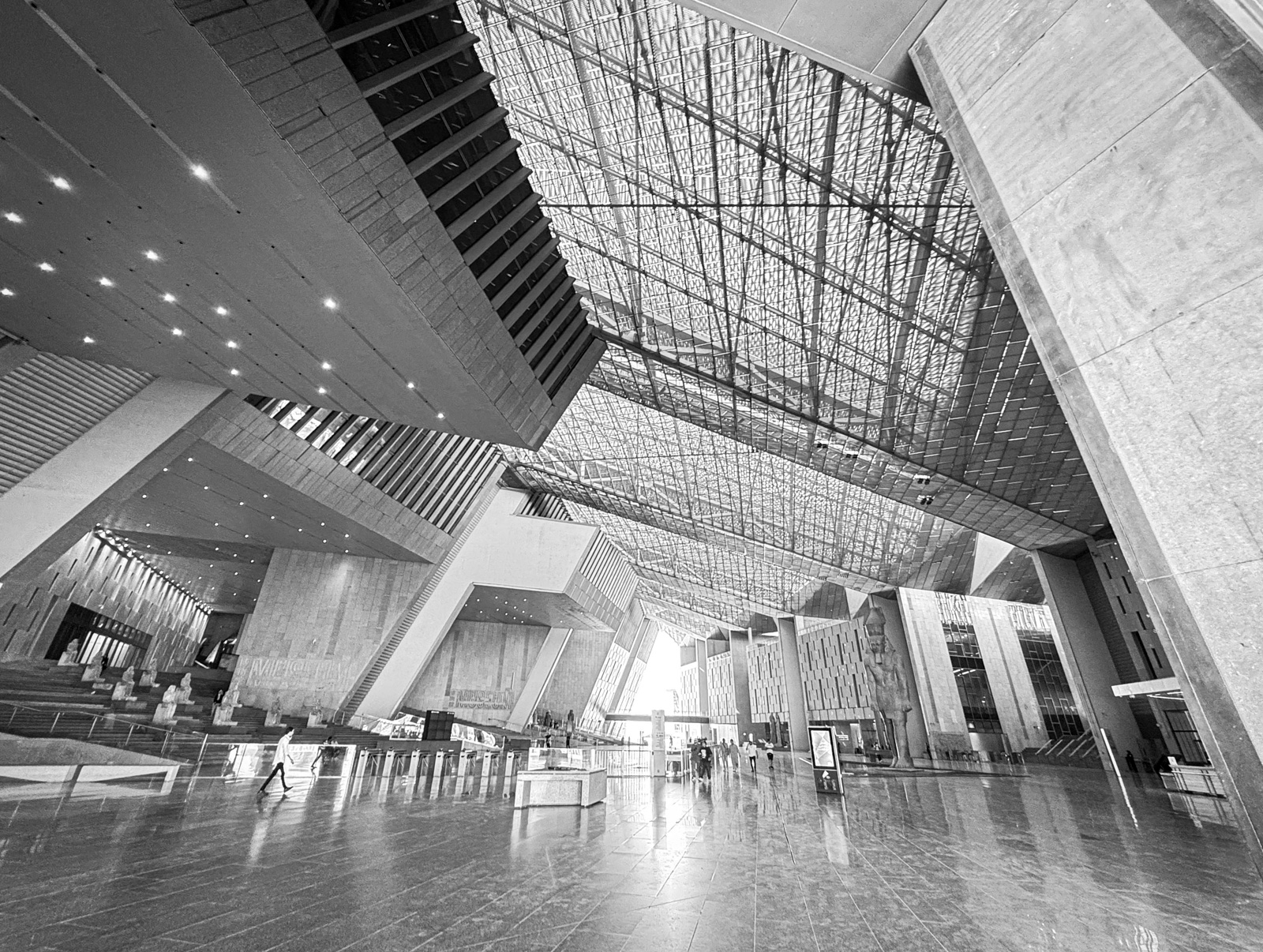
I was able to visit the Grand Egyptian Museum in Cairo in October 2024, just before it opened fully to the public, it is absolutely stunning.

After years of anticipation, the Grand Egyptian Museum—set on the desert edge of Giza with the pyramids rising like ancient sentinels in the background—finally welcomes the world. More than just a museum, the GEM feels like a bridge between eras, where glass, limestone, and geometry meet 5,000 years of human history.
From the moment you step into the soaring atrium, you feel the scale of what Egypt has created. Light pours in from vast windows, illuminating the colossal 3,200-year-old statue of Ramses II that stands as the museum’s guardian. The space is designed with photographers in mind: sweeping lines, warm stone, and dramatic negative space create a modern stage for ancient treasures.
The museum houses the complete Tutankhamun collection—over 5,000 objects displayed together for the first time—arranged with meticulous storytelling. Delicate gold, tiny ceremonial items, and everyday objects from the boy king’s life appear almost suspended in time. The new climate-controlled cases and thoughtful lighting reveal colours and textures that felt muted in the old Egyptian Museum.
One of the GEM’s most compelling features is its connection to the landscape. Step onto the terraces and you can see the pyramids hovering on the horizon, creating a breathtaking dialogue between past and present. It’s a location that invites slow exploration, whether you’re studying hieroglyphic fragments or capturing the golden hour glow across the building’s angular façade.
What makes the Grand Egyptian Museum extraordinary is not only its scale but its intention: to tell Egypt’s story with clarity, respect, and a sense of wonder. As a visitor, you leave with the feeling that history isn’t behind glass at all—it’s unfolding around you, still alive, still speaking.


Leave a Reply